Seamless Flooring Transitions: Design Tips & Solutions for Malaysian Homes: Elevate Your Interior Flow

In the vibrant landscape of Malaysian home design, creating a harmonious and expansive interior is paramount. Seamless flooring transitions are not just a trend; they are a sophisticated design choice that enhances visual flow, improves safety, and contributes to the perceived spaciousness of your home. For Malaysian homeowners, navigating the unique challenges of a tropical climate—from humidity to subfloor variations—while striving for a flawless finish requires thoughtful planning and expert execution. This article delves into the art and science of achieving those coveted, invisible breaks between different flooring materials, offering practical tips and solutions tailored to our local context.
Why Seamless Flooring Transitions Matter in Malaysian Homes
Beyond mere aesthetics, seamless flooring transitions offer a multitude of benefits that resonate particularly well with modern Malaysian living:
- Enhanced Visual Continuity: A smooth transition eliminates jarring breaks, allowing the eye to flow uninterrupted across different zones. This creates an illusion of larger, more open spaces, highly desirable in contemporary open-plan layouts.
- Improved Safety: Eliminating bulky transition strips or uneven joins significantly reduces trip hazards, making your home safer for children, the elderly, and everyone in between.
- Simplified Maintenance: Fewer crevices mean fewer places for dust, dirt, and moisture to accumulate, making cleaning easier and more efficient—a practical advantage in Malaysia's often dusty and humid environment.
- Modern Aesthetic Appeal: Seamless transitions are a hallmark of minimalist and modern design, reflecting a high level of craftsmanship and attention to detail. This elevates your home's overall perceived value and sophistication.
- Addressing Malaysian Climate Challenges: While the goal is seamlessness, smart material choices and installation techniques are crucial to account for thermal expansion and contraction due to our tropical heat and humidity.
Mastering the Art: Types of Seamless Transitions & Their Application
Achieving a truly seamless look often involves sophisticated techniques and material considerations:
1. Same Material, Subtle Variations
- Using Identical Materials: The ultimate seamless look is achieved when the same flooring material extends across different rooms. For example, large format porcelain tiles spanning from the living room into the dining area and kitchen.
- Pattern or Colour Changes: Even with the same material (e.g., tiles), a change in pattern, colour, or grout colour can define zones without a physical break, offering a 'visual' transition.
2. Different Materials, Same Level
This is where the true challenge and artistry lie. The key is meticulous subfloor preparation to ensure both materials meet at precisely the same height.
- Butt Joints: For materials of identical thickness, such as specific engineered wood to another engineered wood, or thin vinyl to thin vinyl. This requires extremely precise cutting and a perfectly level subfloor.
- Grout Lines: When transitioning between different types of tiles or natural stone, a thin, consistent grout line (often in a neutral or matching colour) can create a natural-looking seamless join.
- Self-Levelling Compounds: Indispensable for creating a perfectly flat and level subfloor. This allows materials of different original thicknesses to meet at the same finished height.
- Flexible Fillers & Sealants: For very small expansion gaps or slight height discrepancies, colour-matched, high-quality silicone or polyurethane sealants can create a discreet, flexible barrier, especially useful for wood-to-tile transitions where minimal movement is expected.
- Micro-bevelled Edges: For certain laminate or engineered wood products, the subtle bevel on the edge of each plank creates a soft visual separation that is less obtrusive than traditional strips.
3. Concealed Expansion Gaps
For materials like engineered wood or laminate, expansion gaps are vital in Malaysia's climate. These can be cleverly concealed:
- Under Skirting Boards: The most common method, allowing the flooring to expand and contract freely beneath the perimeter skirting.
- Custom Baseboards/Trims: Specially designed trims that sit slightly above the flooring, covering the expansion gap without being a visible transition strip.
Design Tips & Practical Solutions for Malaysian Homeowners
Achieving flawless seamless transitions demands careful planning and professional execution, especially when considering Malaysia's unique environmental factors:
- Strategic Material Selection: Choose materials known for stability in high humidity. Porcelain tiles and high-quality SPC (Stone Plastic Composite) vinyl are excellent choices due to their minimal expansion and contraction. For wood-look options, engineered wood is generally more stable than solid timber. Consider the slip resistance for different zones, particularly near bathrooms or kitchens.
- Rigorous Subfloor Preparation: This is arguably the most critical step. Invest in professional subfloor levelling using self-levelling compounds. Any height differences, even by a few millimetres, will compromise the seamless look and structural integrity. Ensure the subfloor is clean, dry, and free of cracks.
- Thoughtful Layout Planning: Map out your flooring transitions during the design phase. Plan for transitions to occur at natural breaks like doorways, archways, or where furniture naturally creates a division. Avoid cutting materials mid-room unless absolutely necessary.
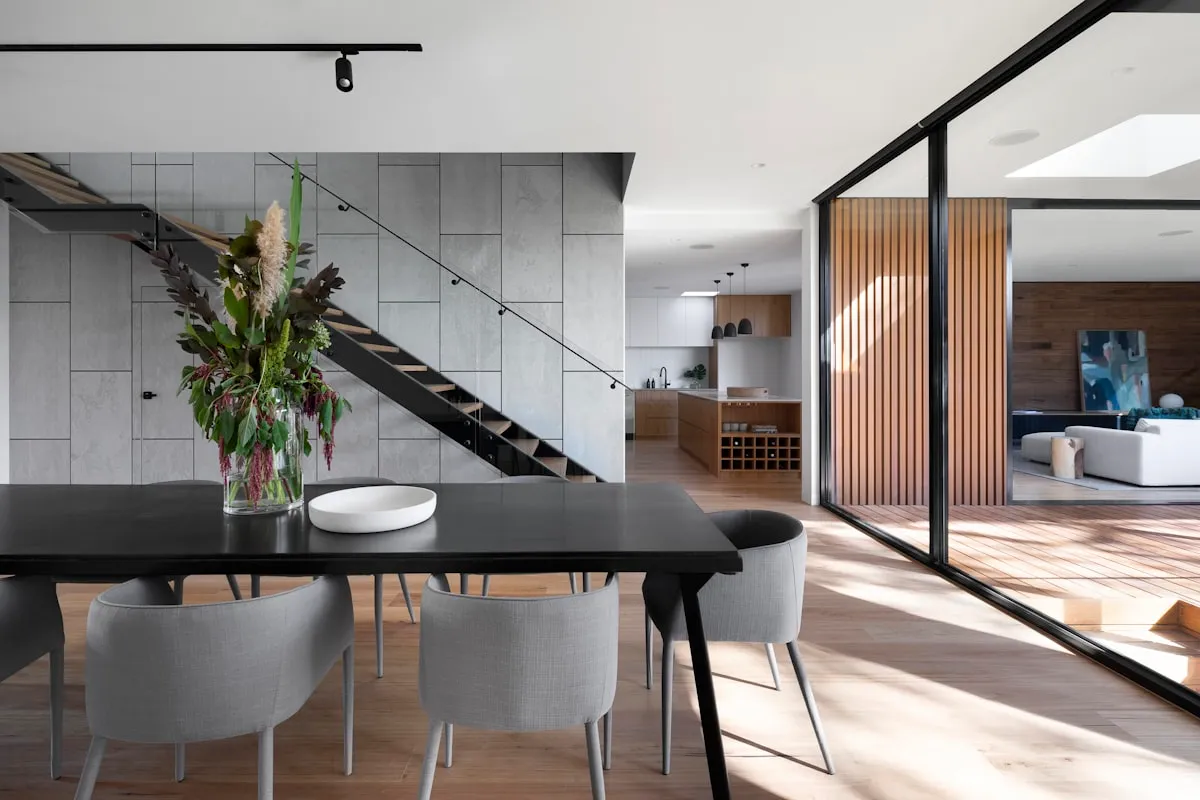
- Cohesive Colour & Texture Palettes: Even with different materials, maintaining a consistent or complementary colour palette and textural feel will enhance visual flow. For example, a light grey concrete-look tile transitioning to a light oak engineered wood can work beautifully.
- Professional Installation is Non-Negotiable: The precision required for seamless transitions is beyond DIY capabilities for most homeowners. Engage experienced flooring specialists who understand the nuances of various materials and are adept at detailed subfloor preparation, precise cutting, and proper expansion gap management for our local climate.
- Humidity & Termite Resistance: For areas prone to moisture (e.g., kitchen, bathrooms), opt for fully waterproof materials. For wood-based flooring, ensure it is treated for termite resistance or choose materials naturally impervious to pests, like stone or SPC vinyl. Proper ventilation also plays a significant role in mitigating humidity effects.
- Acoustic Considerations: With open-plan living, consider underlays that provide sound dampening, especially when transitioning from hard surfaces to softer ones, or from upper floors.
Frequently Asked Questions
1. What are the best flooring materials for seamless transitions in Malaysian humid weather? +
2. How much does professional installation for seamless flooring transitions typically cost in Malaysia? +
3. Are seamless transitions more susceptible to termite infestation in Malaysian homes? +
4. How do I maintain seamless flooring transitions, especially with Malaysia's dust and humidity? +
5. Can I achieve seamless transitions between a wet area (like a kitchen) and a dry area (living room) in a Malaysian home? +
Conclusion
Seamless flooring transitions are a powerful design element that can transform any Malaysian home into a modern, cohesive, and safer living space. While achieving this level of sophistication demands attention to detail, careful material selection tailored to our tropical climate, meticulous subfloor preparation, and the expertise of professional installers, the result is undoubtedly worth the effort. By embracing these design tips and solutions, you can create an interior flow that is not only visually stunning but also highly functional and enduring for years to come.